Allianz Australia, via Objective Experience · 2016
Allianz: broker research for a new farm insurance quoting system
Led two rounds of contextual and usability research with 20 rural brokers to shape Allianz’s new farm insurance products and quoting system.
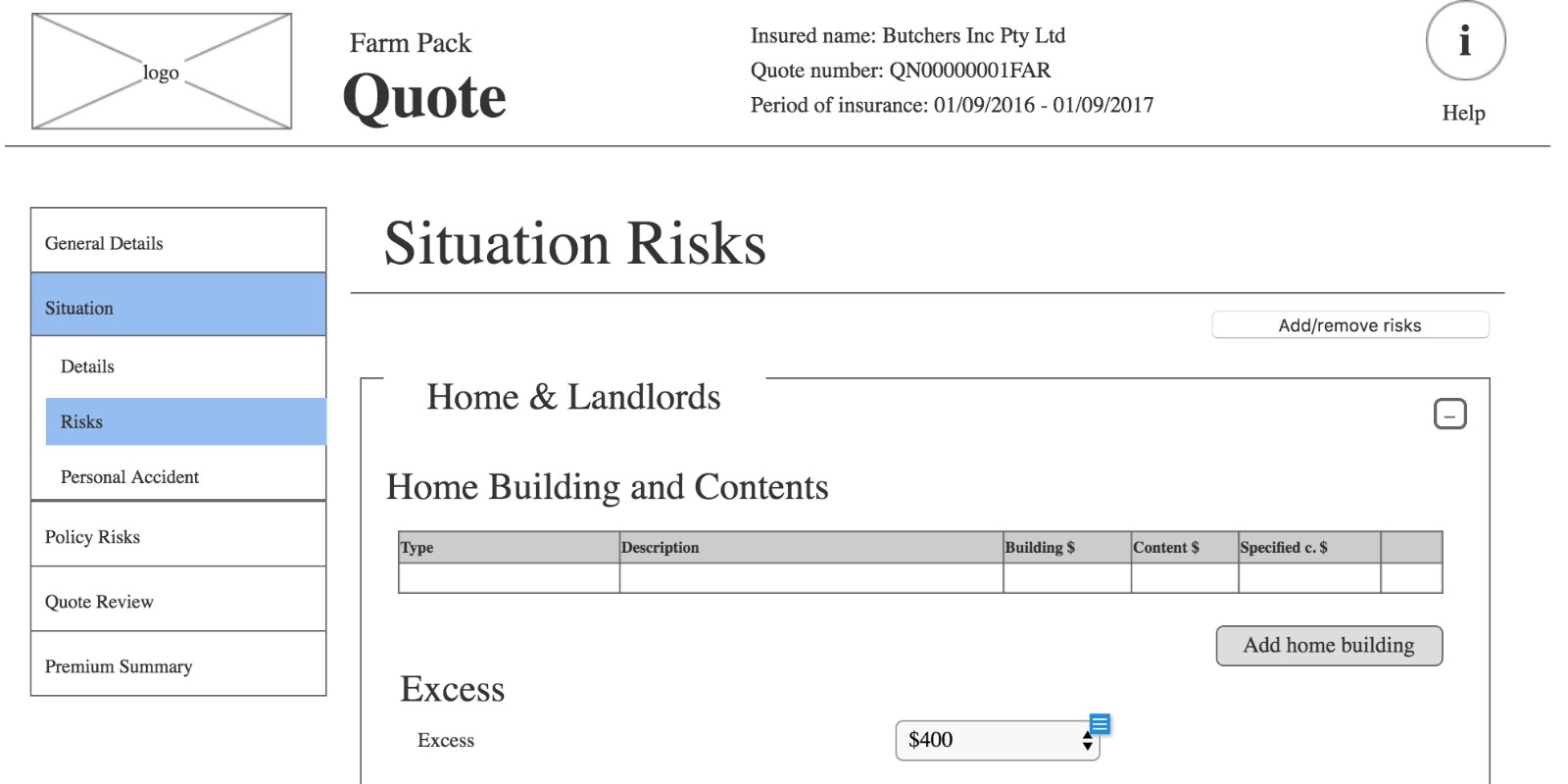
Allianz Australia was redesigning its farm insurance products and the system brokers use to quote them. I led two rounds of research with rural brokers, the people who actually sell farm policies, so their experience shaped both the products and the quoting system before Allianz built them.
The problem
As part of a broader growth strategy, Allianz wanted to grow its rural and farm business and introduce a new lifestyle farm product for the growing number of people buying hobby farms and rural properties. It planned to split farm insurance into separate packs for working, lifestyle and corporate farms, and to replace its quoting system, all while keeping its rating accurate so premiums matched the risk.
Brokers sell nearly all farm insurance, so their view mattered most. My objective was to understand how brokers quote commercial and lifestyle farm policies, test the proposed products and system with them, and find ways to help them quote more farm policies with Allianz.
My role
As a customer experience consultant at Objective Experience, I led the research end to end. I reviewed the existing quoting system, business requirements and proposed mockups, wrote the discussion guides, ran the broker interviews across Australia, designed the prototype for the second round, and presented findings to the project team and wider stakeholders. I led round two with a fellow researcher, Miriam Steenhaur.
Approach
Round one: contextual interviews (July 2016). I reviewed the interview script and proposed system mockups with the project team and four more internal stakeholders. Then I interviewed eight brokers in 60–90 minute in-person sessions in Sydney, Brisbane, Melbourne and rural New South Wales, Queensland and Victoria. Brokers specialized in working farms, lifestyle farms or both, across a range of experience levels. Each session covered their farm customers, the competitive landscape and their quoting process, then walked through the proposed system with paper mockups.
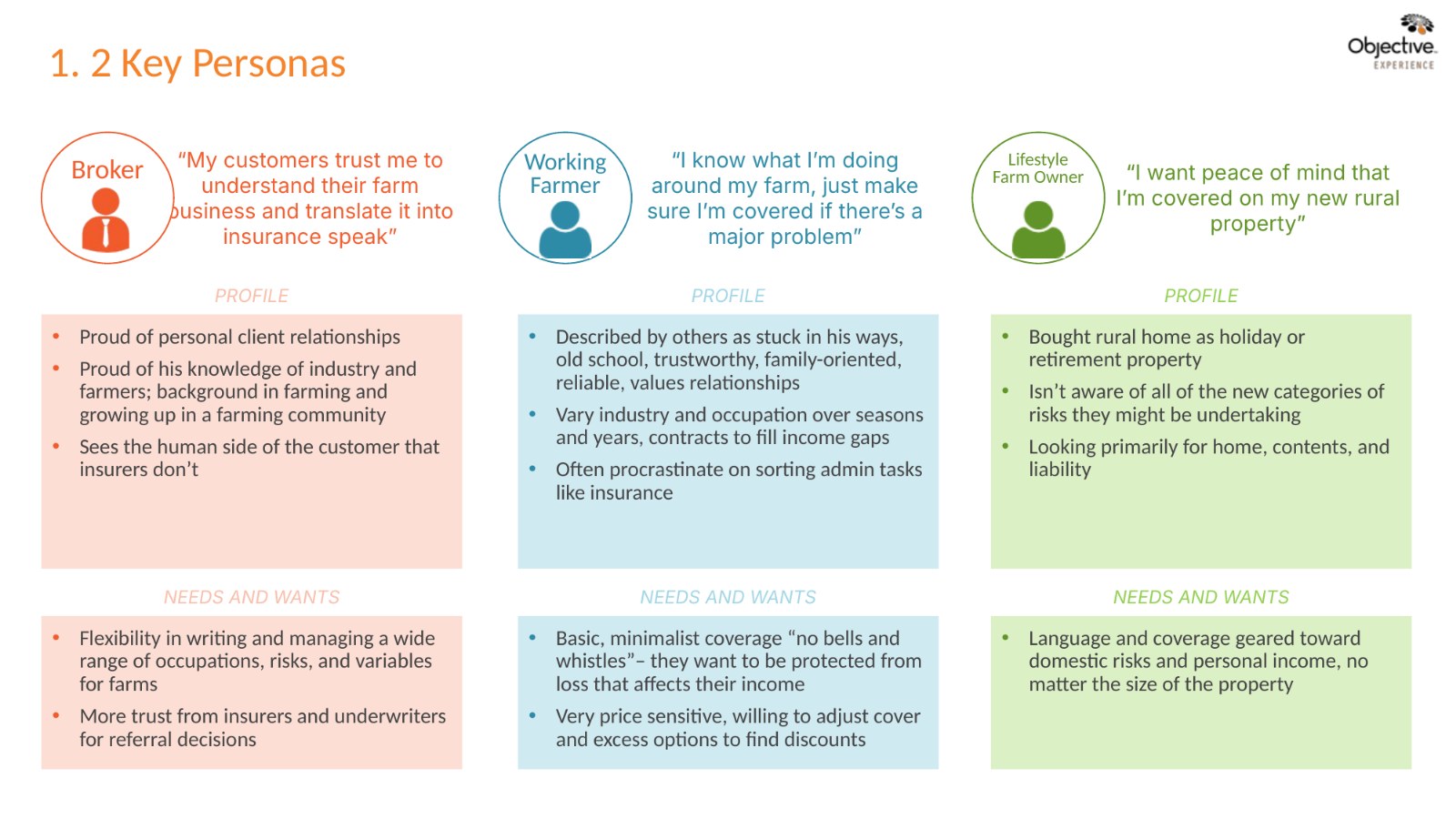
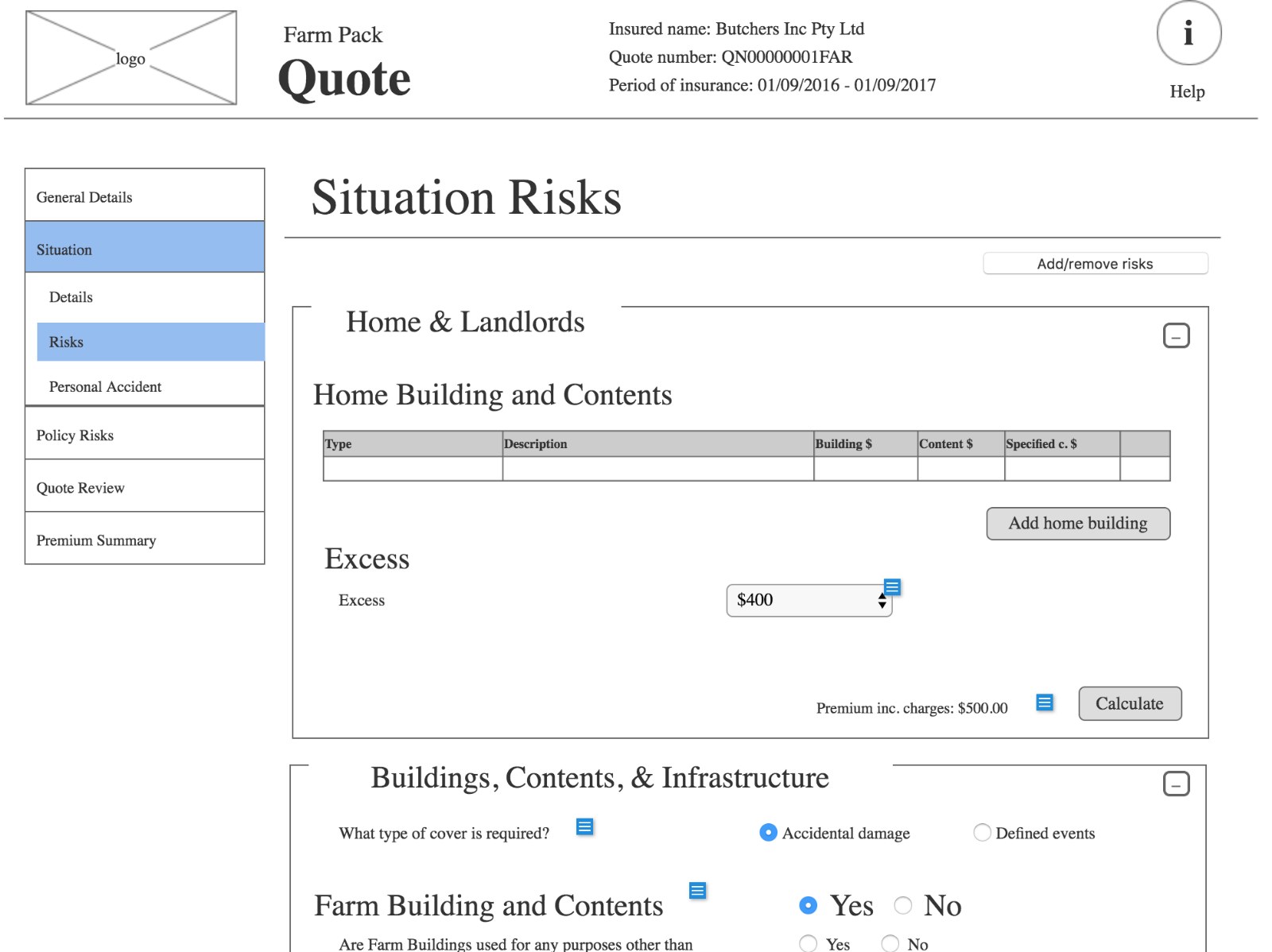
Round two: prototype usability testing (October 2016). I turned the round-one findings into a clickable prototype of the new quoting system, then tested it with 12 brokers: eight in person and four remotely, in rural New South Wales, Queensland and Victoria, Melbourne, Adelaide and Perth. Each broker quoted a working or lifestyle farm policy in the prototype and talked through the proposed product structure.
What we learned
Brokers were willing to give more information, as long as they could see what it did. In one broker’s words: “Don’t ask the question unless it actually does something.” Questions that didn’t visibly change the premium or coverage weren’t just annoying. They told brokers that Allianz didn’t understand farms.
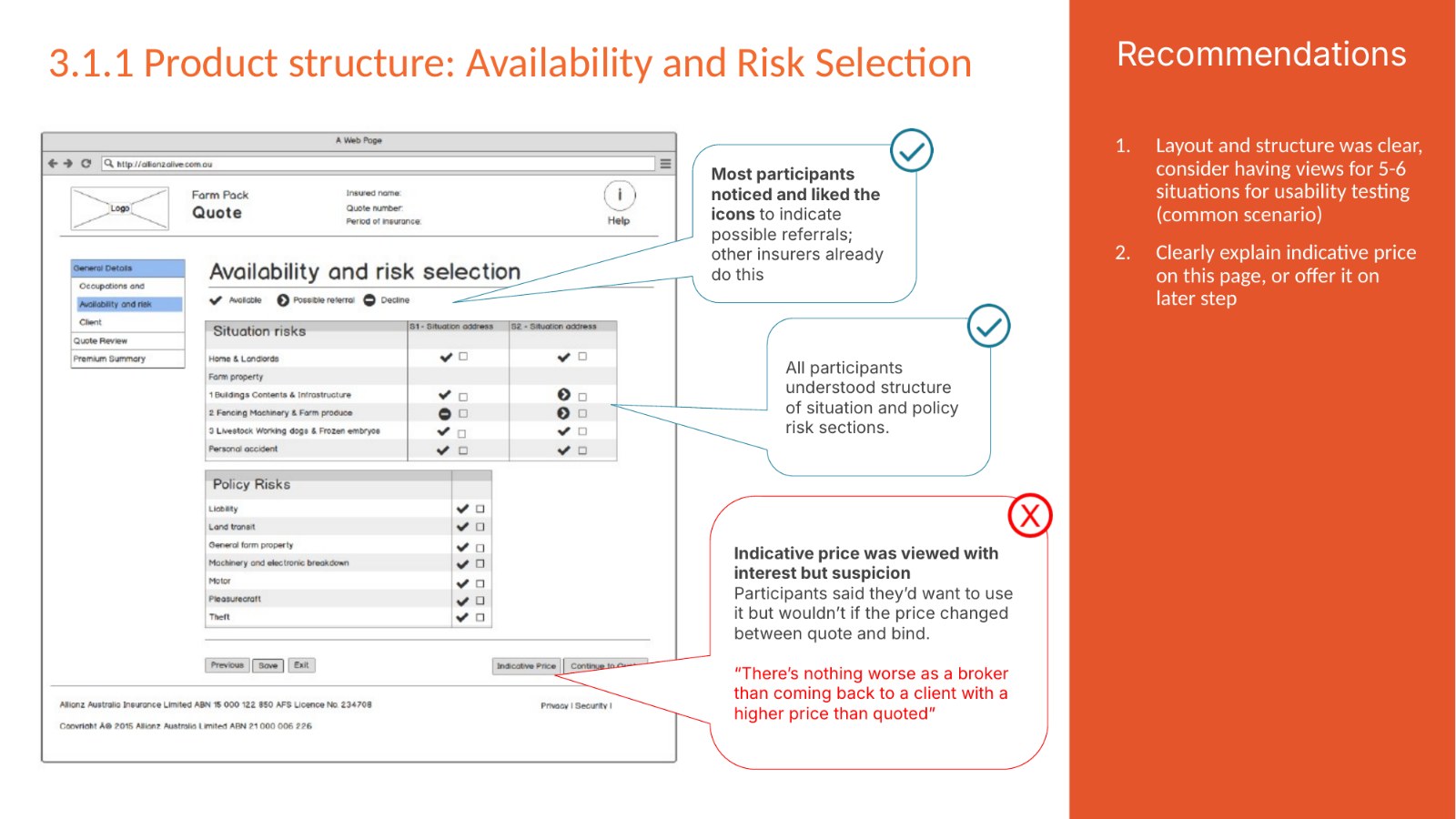
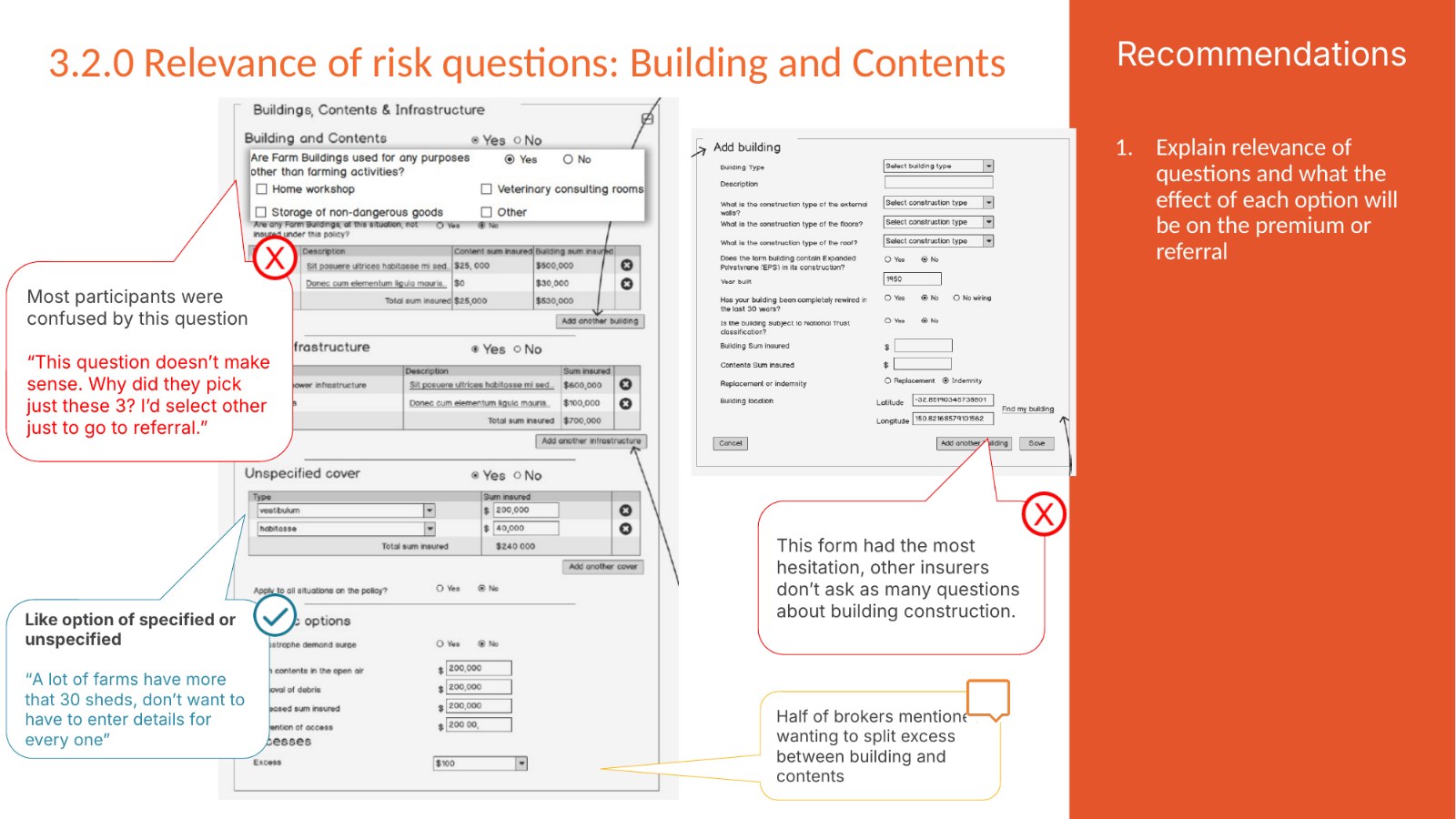
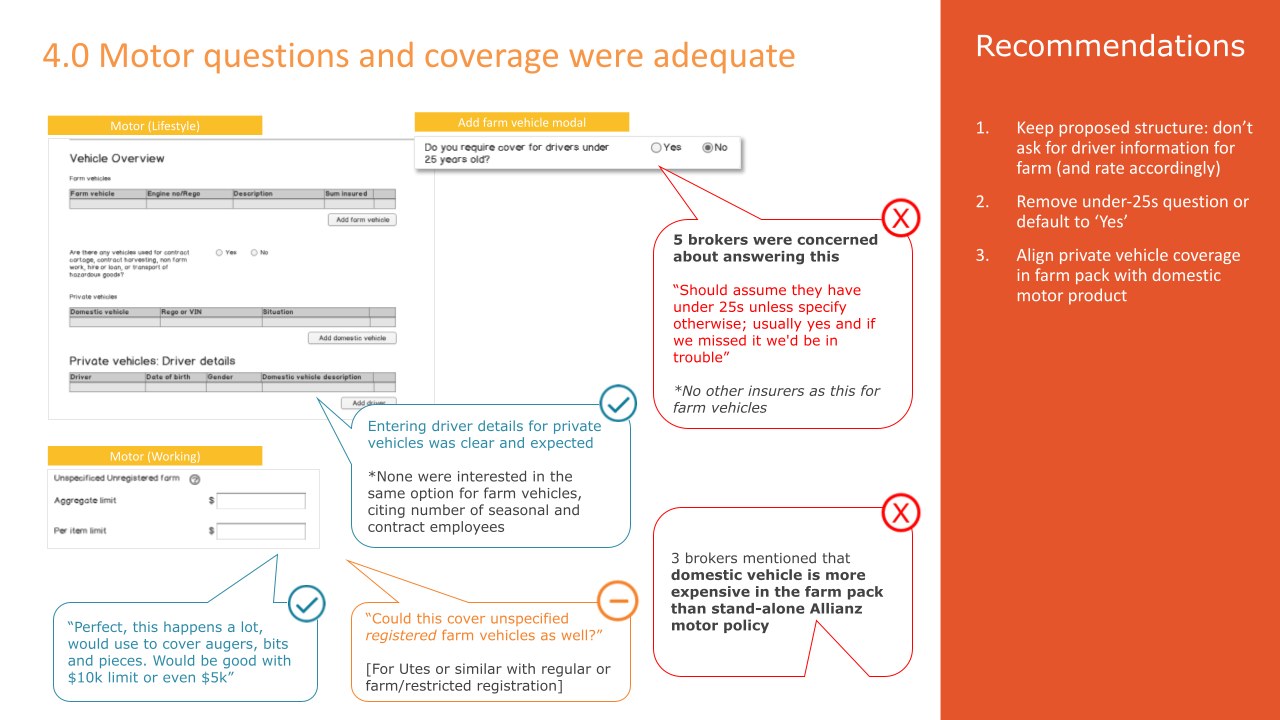
Round two showed the work was paying off. Nearly every broker thought the new system would save them time, and they were enthusiastic about new cover for landlords, unspecified farm property and infrastructure. Nine brokers saw value in separating working and lifestyle farm products. But six of them felt the proposed lifestyle pack looked too much like the working farm pack: most lifestyle customers only need home, contents and liability, maybe a few sheds or animals.
Outcomes
- Product structure: I recommended reworking the lifestyle pack to work like domestic insurance plus acreage, with automatic cover for farm property, and keeping hobby farms as an occupation in the farm pack for more complex risks.
- Quoting system: I recommended explaining each question’s effect on premium, coverage or referral in context, allowing ranges and notes for figures that vary year to year, like turnover and livestock, and rewording or removing the questions that caused the most frustration.
- Broker relationship: I recommended giving brokers visibility into rating criteria, premium calculation and referral triggers, so the system reinforced their expertise instead of second-guessing it.
- Delivery: I presented the findings in stakeholder workshops framed around the business objectives and revenue impact, with a detailed issues list linked to video clips from the sessions. The research informed the products, interface and quoting system Allianz built next.
Reflection
The brokers taught me that in B2B tools, every question carries a message. A form that asks for information it never uses tells expert users that the company doesn’t understand their world. Showing people why you ask, and what their answer changes, builds the trust that keeps them quoting with you.