Runnings and Lippert, via Vaimo · 2020–2023
eCommerce strategy, UX and UI for Vaimo, Inc.
Led eCommerce strategy, UX and UI for two enterprise sites where online buying had to work with stores, inventory, dealers and business customers.
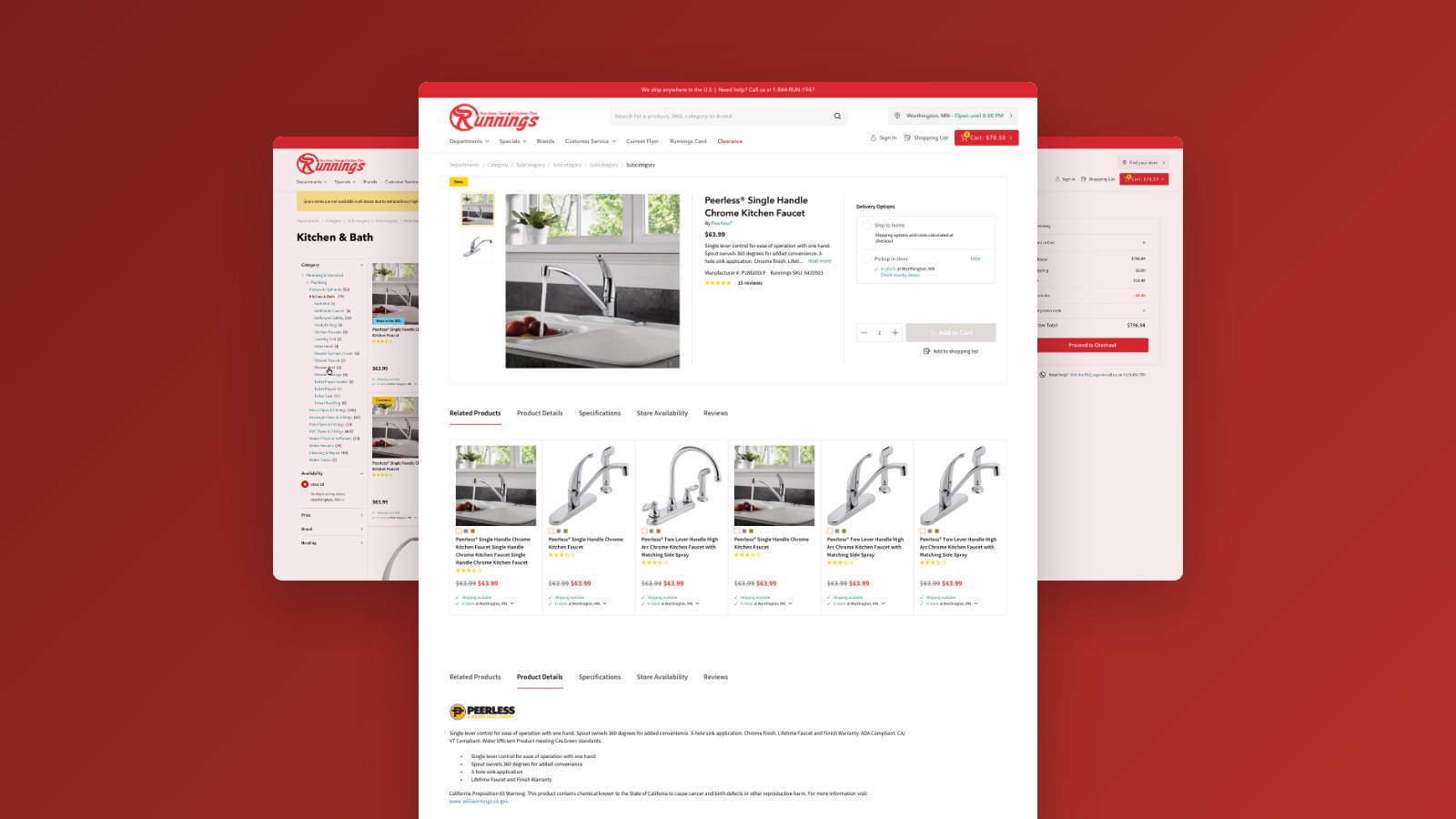
I led eCommerce strategy, UX and UI for both sites through Vaimo. On each one, the hardest design problems sat behind the screen: store inventory, pickup and delivery for Runnings, and dealers and business customers for Lippert. The site had to work with how each company already sold.
The problem
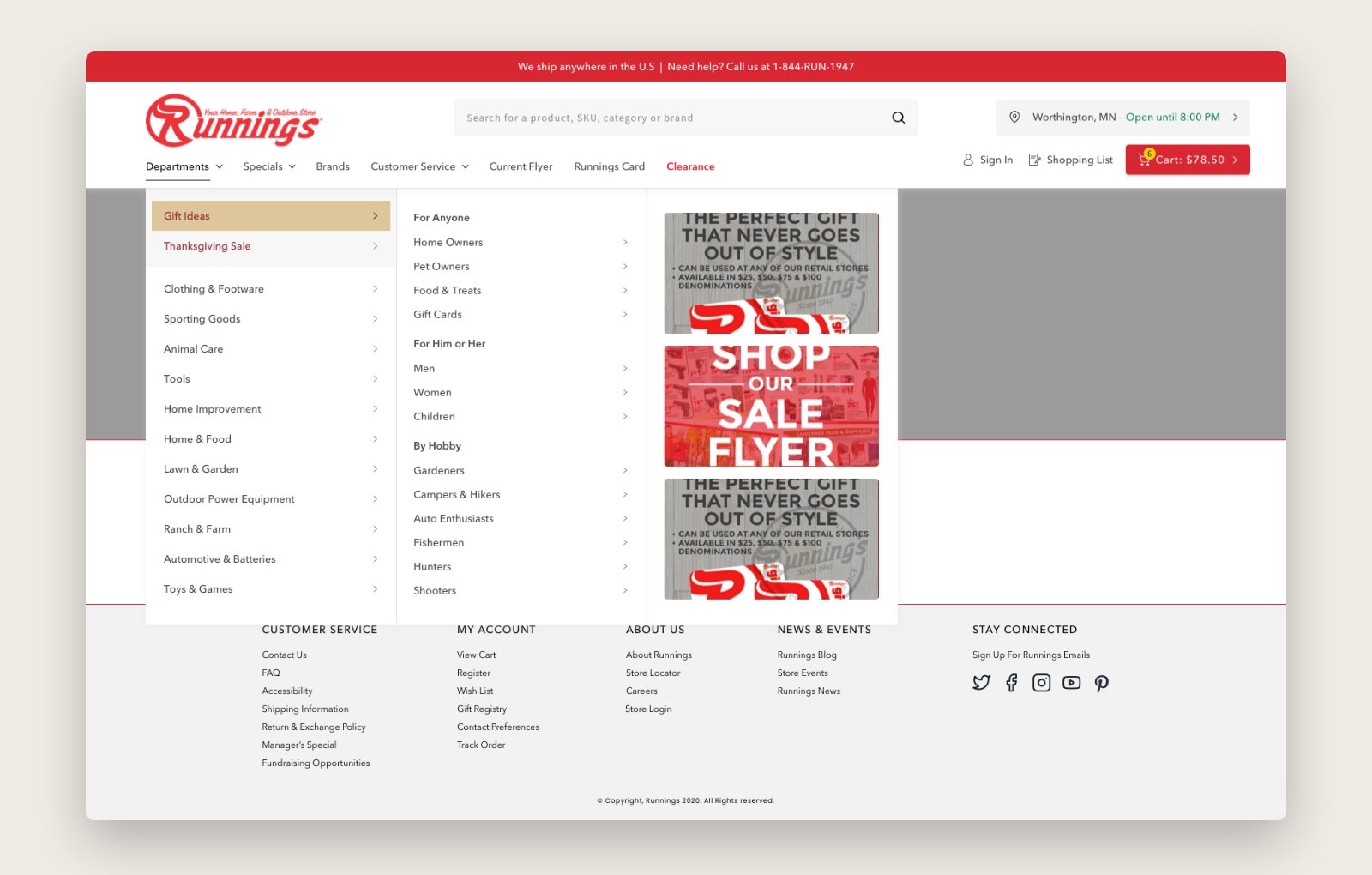
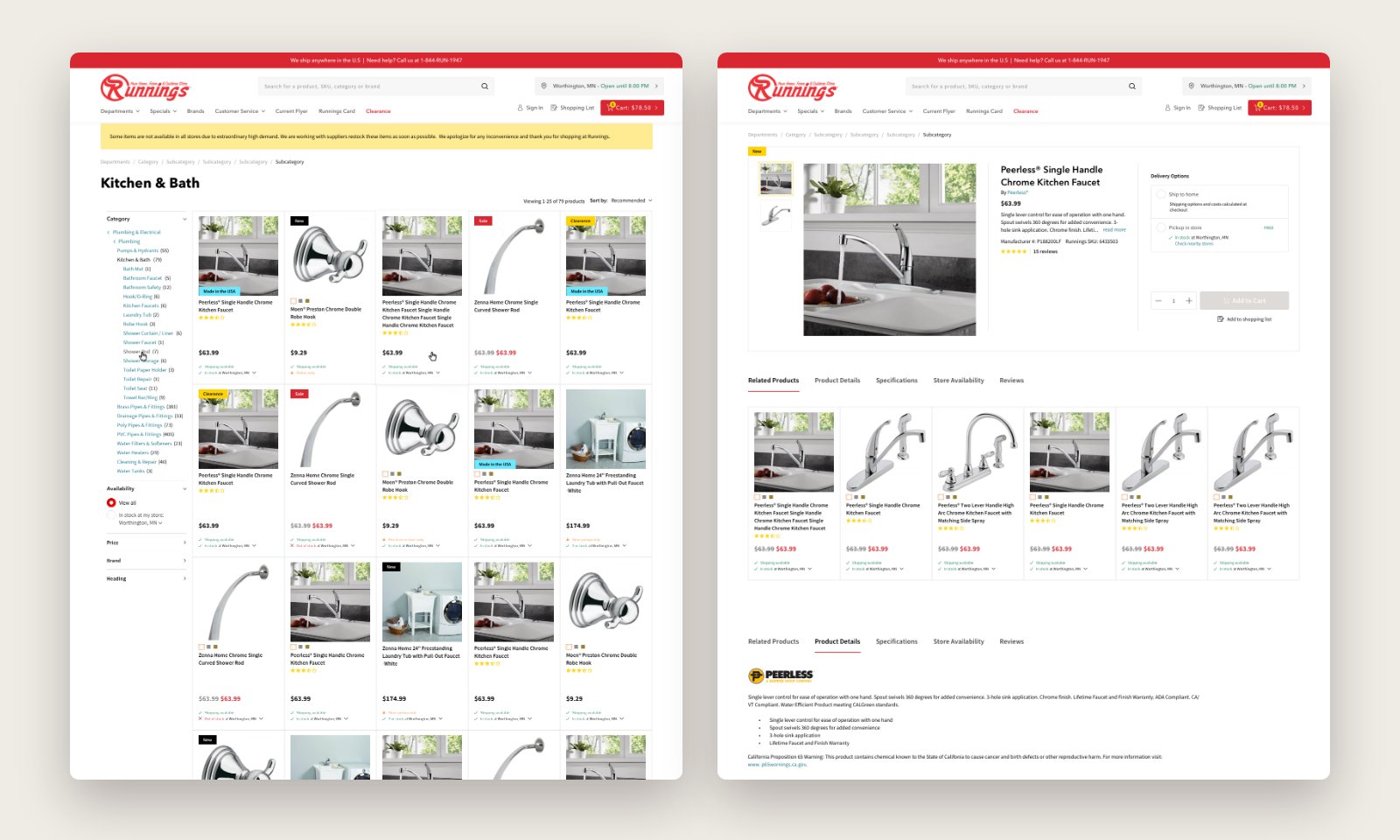
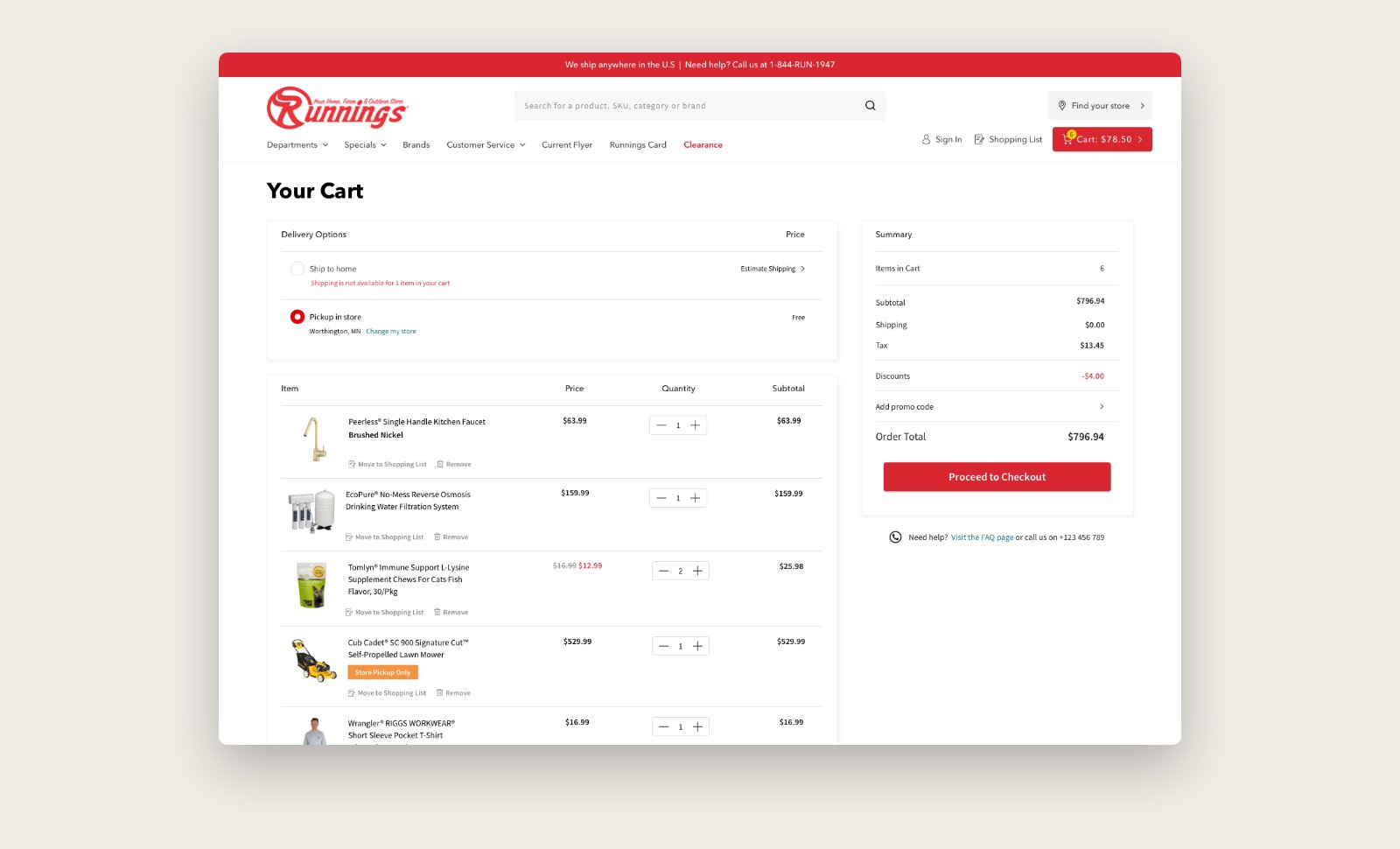
Runnings is a farm and outdoor retailer with a loyal in-store customer base and an eCommerce site that lagged behind competitors. It needed a true omnichannel experience: customers shopping online or in store, seeing what each store had in stock, and choosing pickup or home delivery in the same order.
Lippert sells parts, upgrades and accessories for RVs, boats and towing through a family of brands. It sells to consumers, and also through dealers and business customers, so the new site had to serve each group without working against the others. Four business objectives framed the work: own a larger share of the recreational aftermarket eCommerce space, increase loyalty and lifetime value across related brands, deepen the relationship between customers and the Lippert family of brands, and make every service point a source of confidence for customers.
My role
I led design and strategy on both engagements, working with a solution architect, a project manager and developers. On Runnings, I designed the UX and UI for the entire site, from information architecture through store inventory, cart, checkout and the in-store pick-and-pack experience for employees. As Experience Design Lead on Lippert, I ran discovery and the UX workstream: personas, journey maps, user flows, information architecture, the design system and screen designs, reviewed weekly with Lippert’s team.
Approach
Runnings: one store, online and in person. I ran workshops with the eCommerce, brand and marketing teams to understand their goals, customer research and deep product catalog. I redesigned the information architecture so customers could find products faster, then mapped journeys for every way a customer could buy: online for delivery, online for store pickup, and in the store itself. Those journeys set the rules for how inventory showed up at each step, from product listings to the cart, and how employees picked and packed pickup orders.
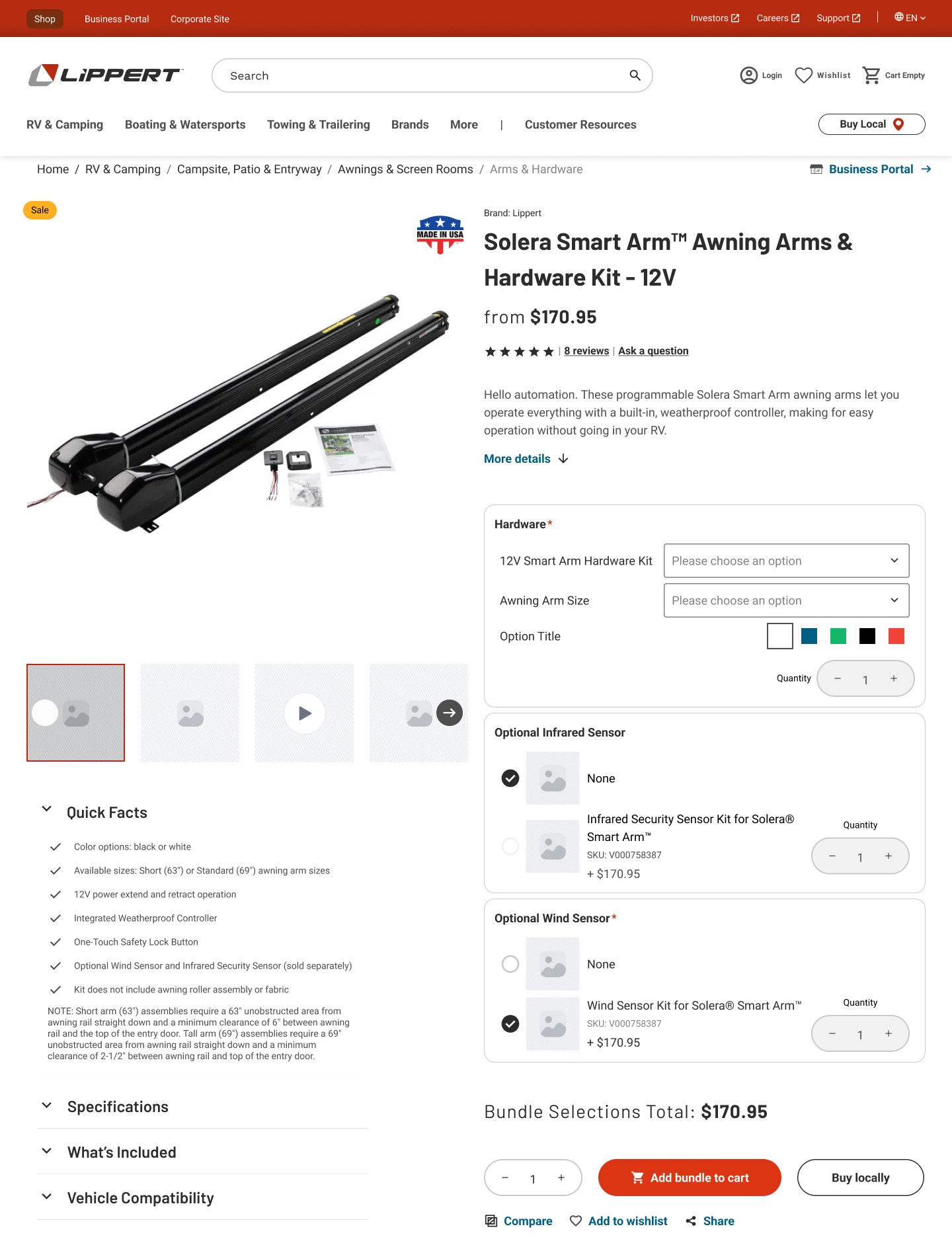
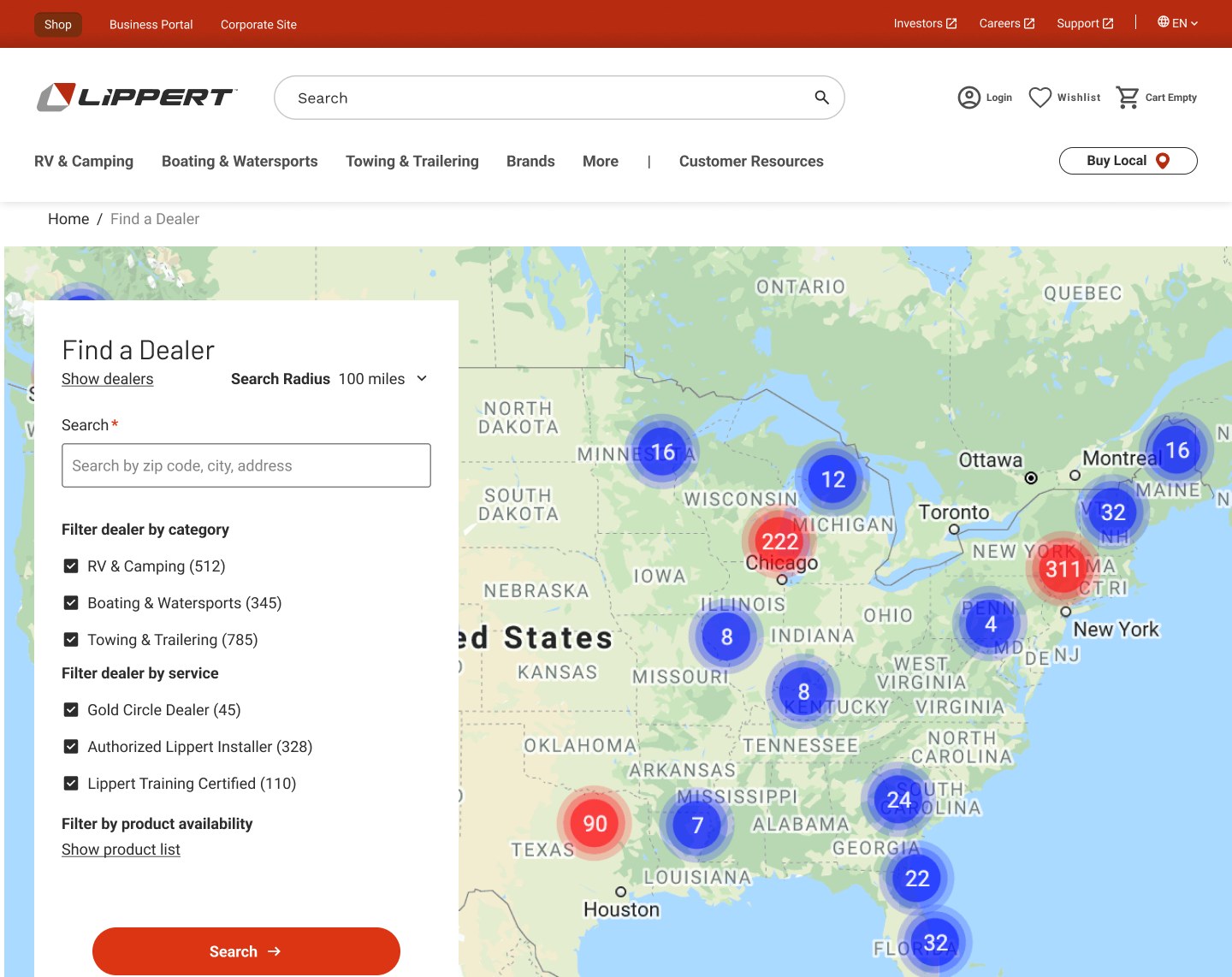
Lippert: consumers, dealers and business customers. I ran UX workshops with Lippert’s teams, then dedicated marine workshops that confirmed one UX approach could serve RV, marine and towing customers. That let the consumer, business and corporate experiences share one design system while each brand kept its identity. Every page gives each audience its own door: Shop, Business Portal and Corporate Site sit at the top of the site. Rather than compete with dealers, the consumer site sends customers to them. A Buy Local button in the header and a Buy locally option on every product page lead to a dealer locator that filters by category, dealer certification and the products each dealer carries. I defined four primary personas from the research and scored how likely each was to support the four business objectives:
- Aspirational Upgrader: “Help me make my outdoor life as amazing as I have always imagined.”
- DIY Expert: “Help me get exactly what I need.”
- Essential Recreationalist: “Get me only what I need to enjoy the outdoor lifestyle.”
- Eager Novice: “Assist me along the learning curve.”
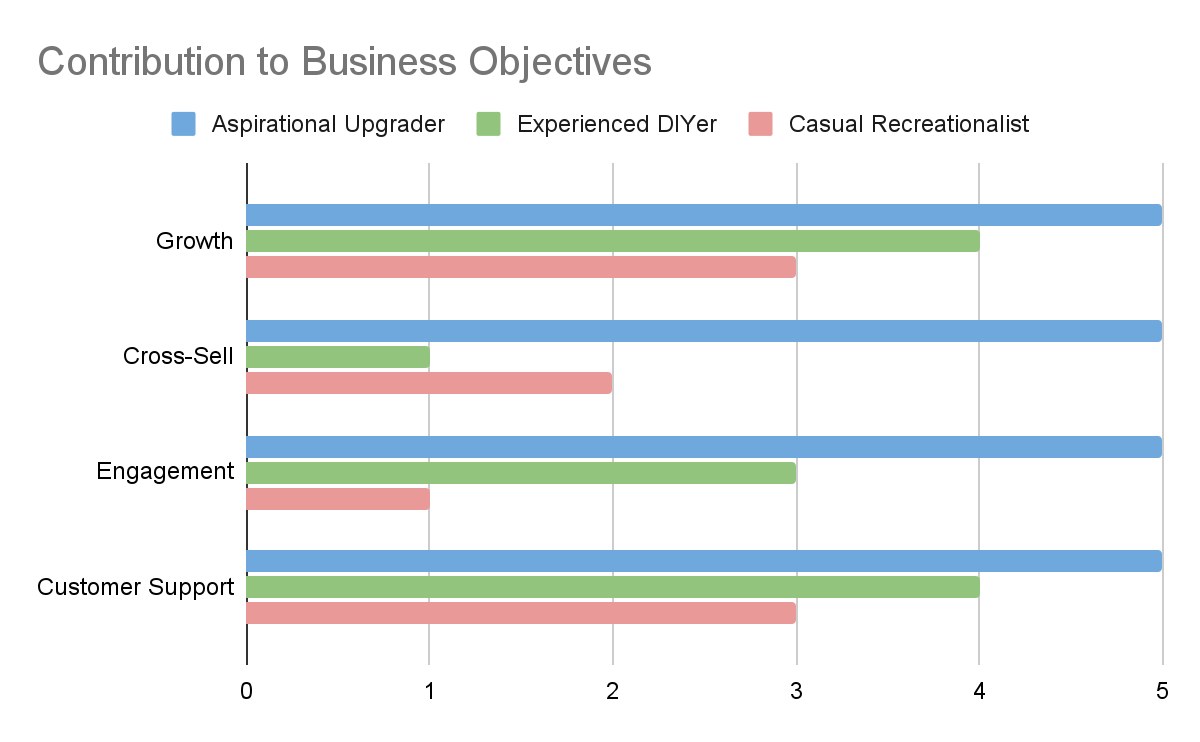
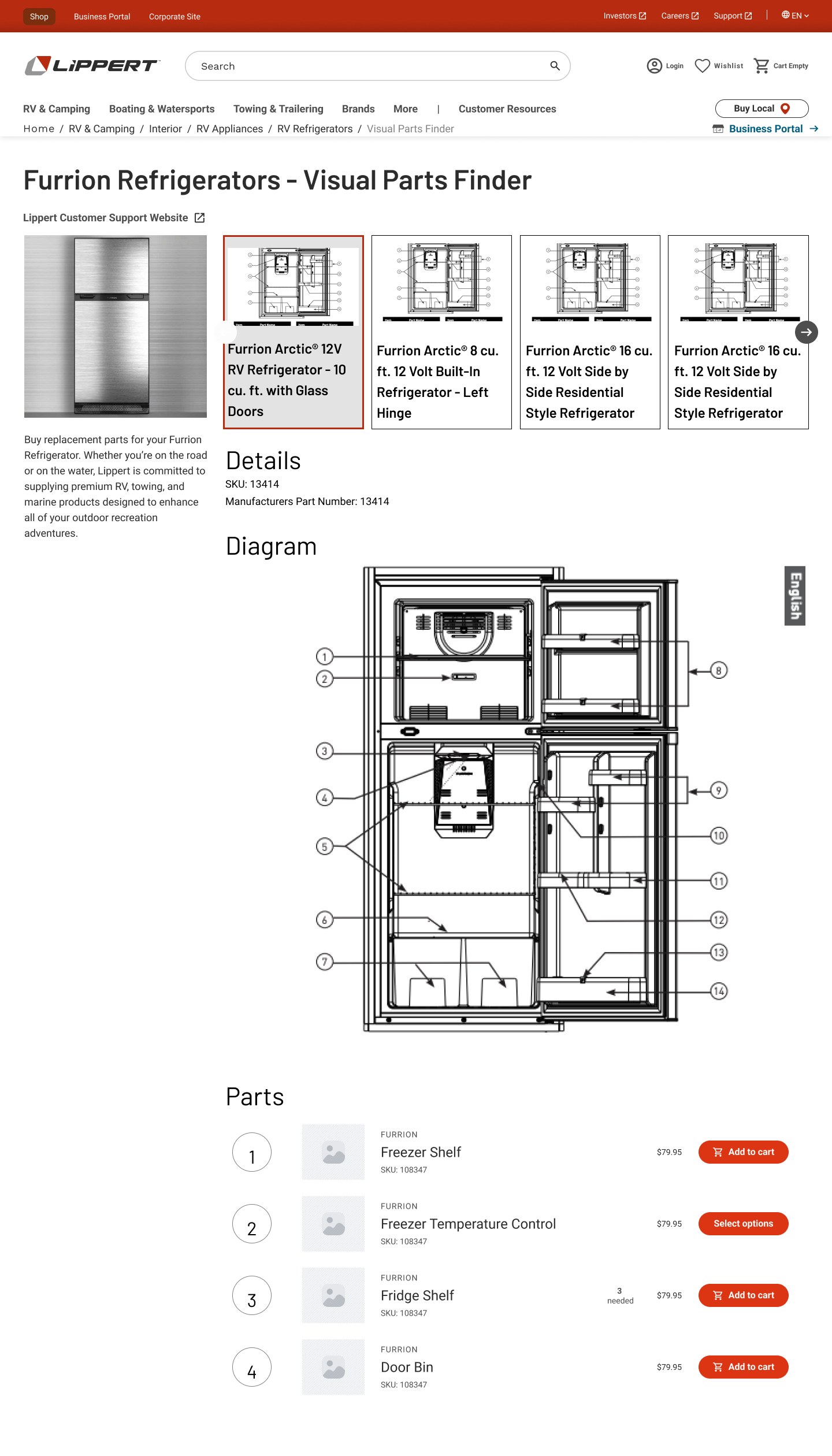
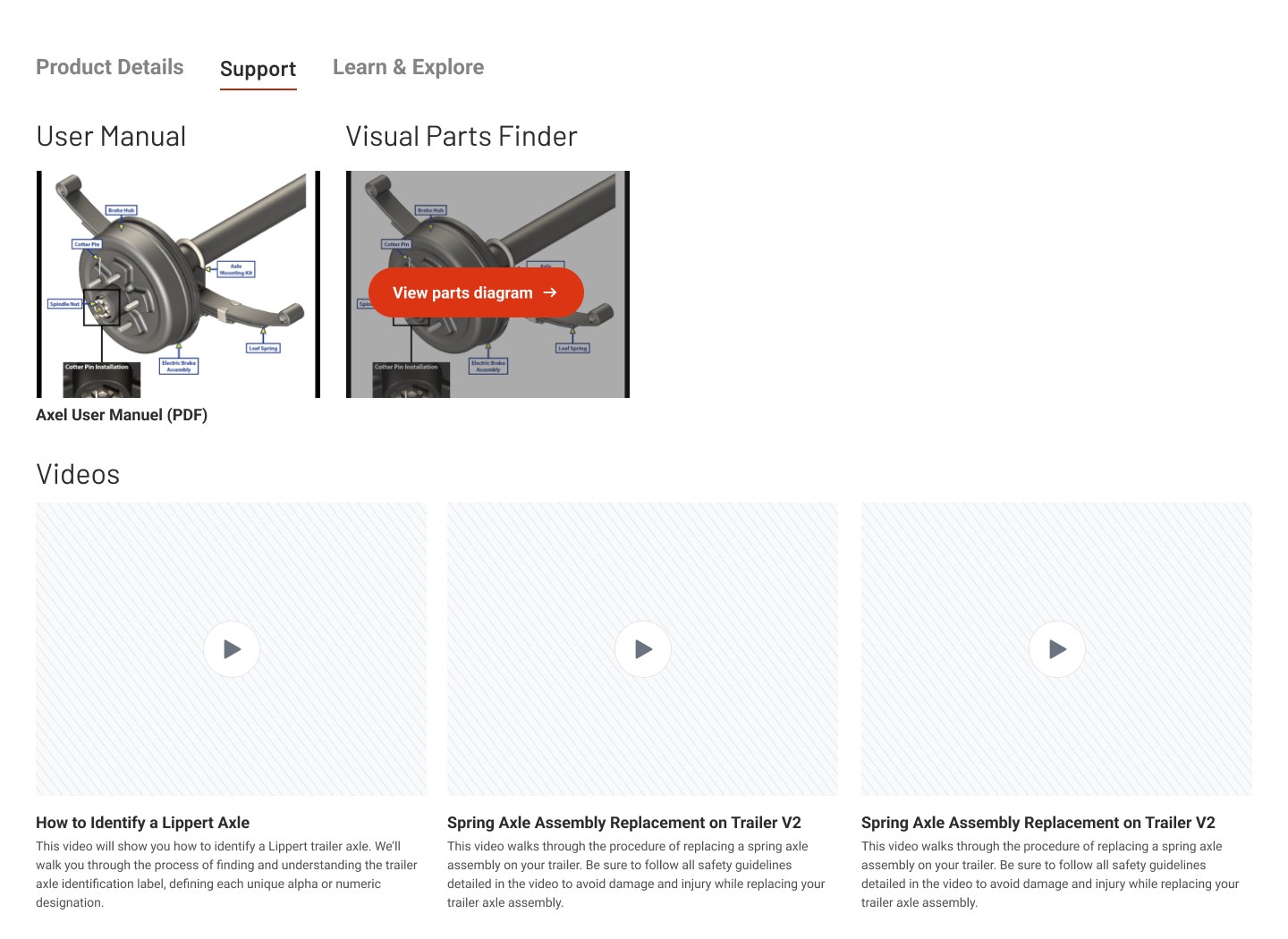
I mapped four journeys from those personas (aspiration-driven, goal-driven, learning-driven and support), each with the moments where a customer might lose confidence or leave. Three principles guided the design: guiding and supportive, aspirational, and delightful. The journeys shaped the features I designed, including a fitment flow that filters results to the customer’s vehicle, a visual parts finder and a support tab on every product page.
The work
Outcomes
- Runnings: The redesigned site launched in fall 2021 with my designs, including store inventory, the cart and checkout flows for pickup and delivery, and the in-store pick-and-pack experience for employees.
- Lippert: The new site launched with my designs, built on the personas, journeys, information architecture and design system from discovery.
Reflection
In both projects, the screens were the easy part. The real design work was in the rules underneath: what a store has in stock, who fulfills an order, and where a dealer fits in a customer’s purchase.
On every Vaimo project, I also designed within the platform: Adobe Commerce, its extensions and third-party tools like Lippert’s visual parts finder. I worked with the solution architect to decide where to use what the platform does out of the box, where an extension or third-party tool fit, and where custom development was worth the cost. That kept the designs buildable and the launches on track.
I start every eCommerce project by mapping the operations and the platform before I design a page. On Lippert, scoring personas against business objectives also gave the team a shared way to decide what to build first.
More eCommerce work at Vaimo
- Next Level Apparel (2021): UX and UI for a B2B wholesale apparel site. I designed bulk ordering by color, size and warehouse, with live stock and restock dates, and worked with developers on a checkout that splits one cart into an order per warehouse.
- Zuri Furniture (2021): UX and UI for a modern home and office furniture retailer’s new Adobe Commerce site, including configurable products like sectionals and desks, tier-sale promotions shown in the cart, and a persistent cart for customers who browse on mobile and buy on desktop.