Personal experiment · 2026
Aligned Voice Profile: an AI experiment in capturing how I write
Designed an AI interview that captures a writing style as a reusable file, starting with my own.
The problem
I write across five platforms, from a UX newsletter to nonprofit consulting to a family travel blog. AI drafts for all of them came back sounding generic, and I spent more time editing the output than I saved by using AI.
I wanted to know whether a structured description of my voice could fix that problem at the source. The test was simple: could Claude produce drafts I would publish with light edits?
Approach
I treated my own writing as a research subject. I analyzed my published articles and newsletters, documented my sentence rhythm and platform-specific habits, and wrote explicit rules for the patterns I never use, such as one-sentence paragraphs and negation-then-reframe constructions.
I packaged the result as a Claude skill file and refined it over months of daily use. Each time a draft missed, I traced the miss to a gap in the file and added a rule or an example.
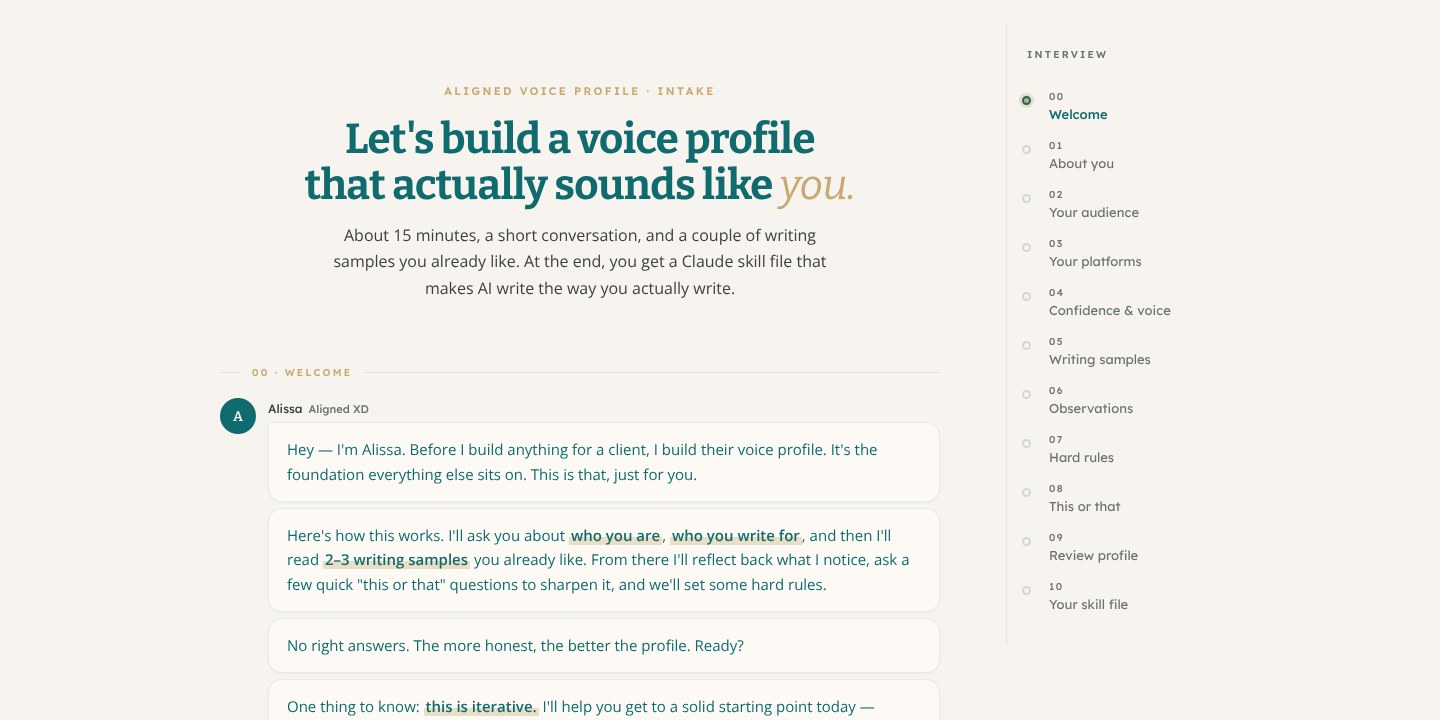
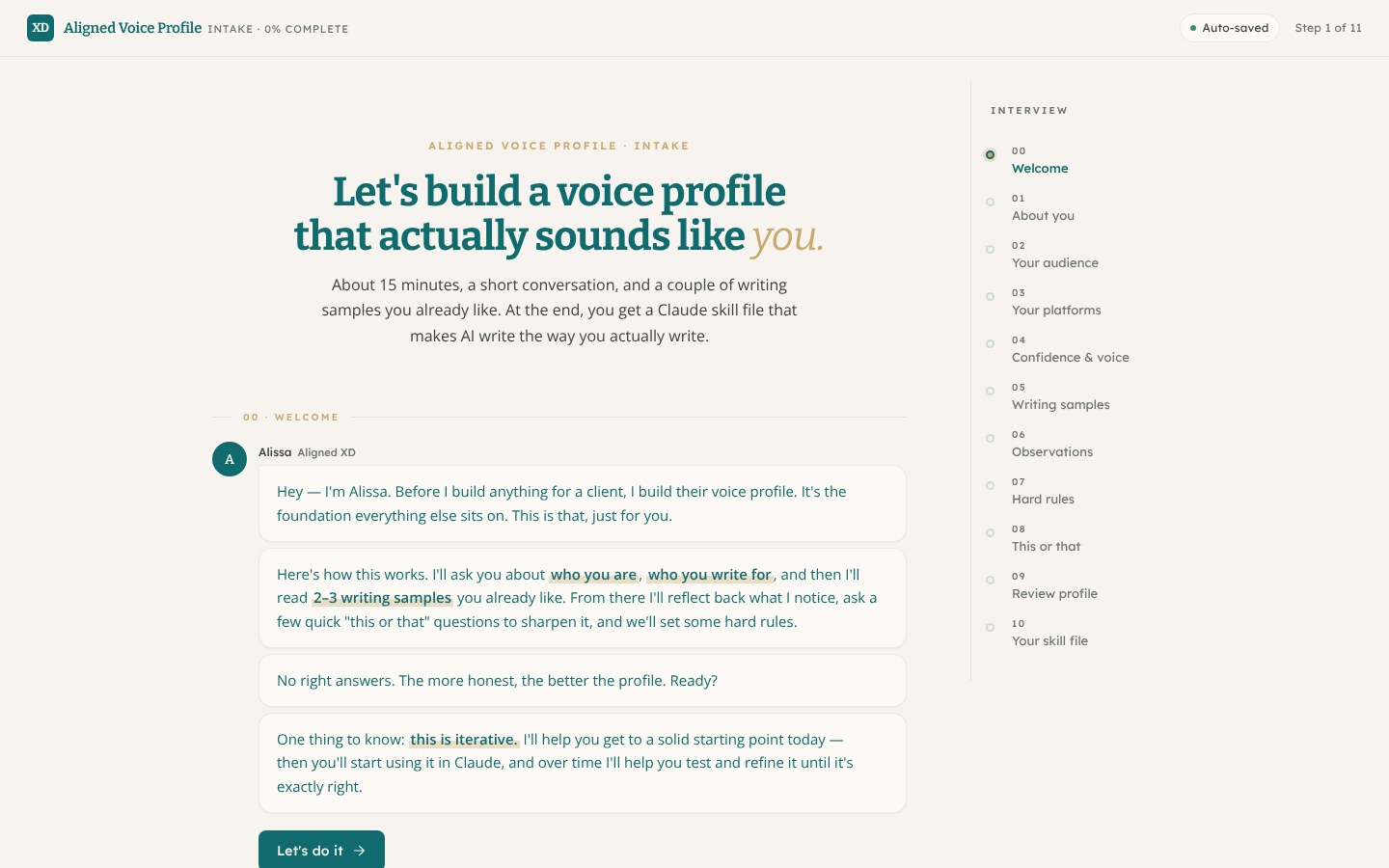
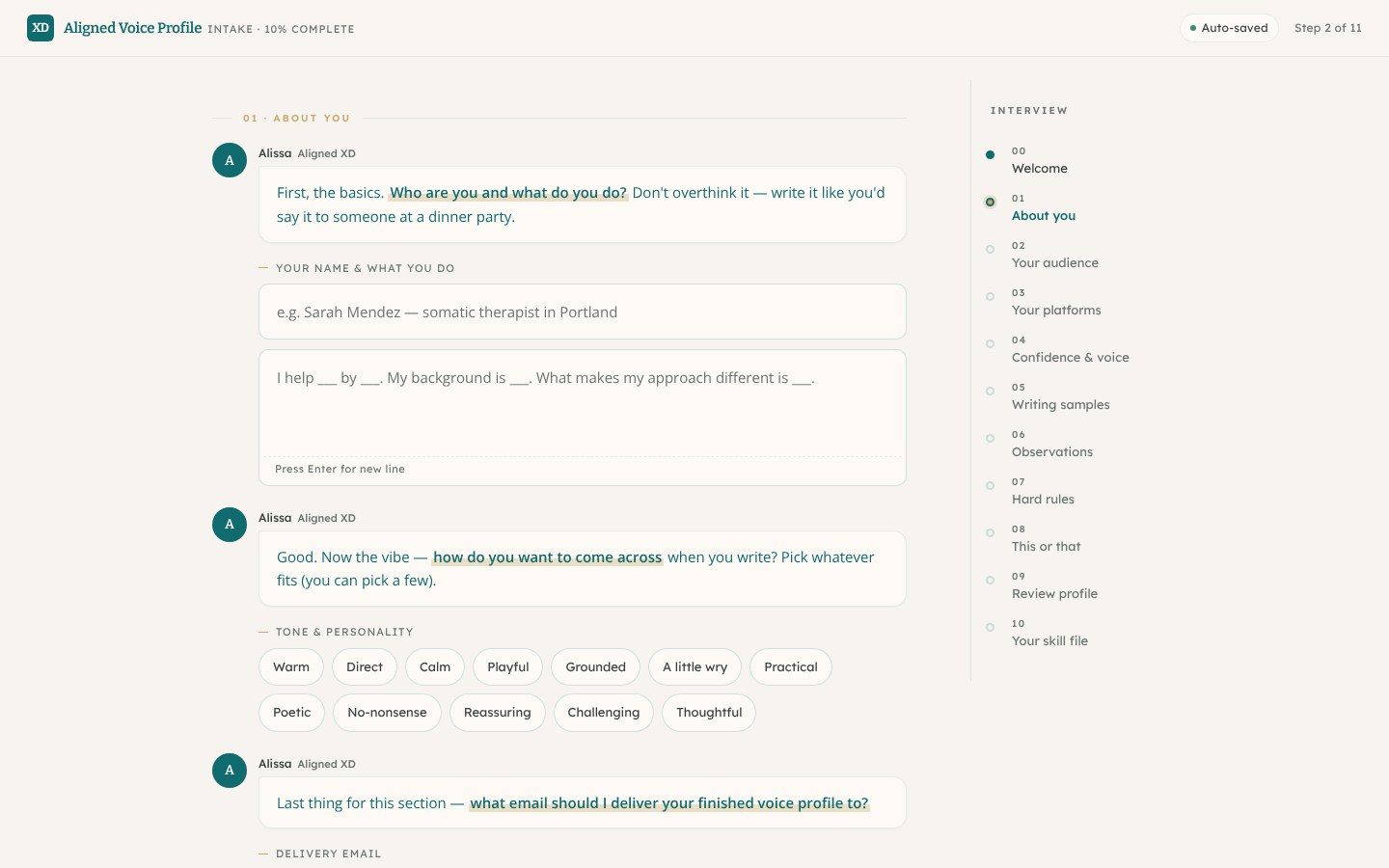
Once the file worked for me, I designed an 11-step interview that captures the same information from someone else in about 15 minutes. It reads like a conversation with me: short prompts, chips for tone, and a progress rail so people always know how far they have to go.
The interview moves from easy to hard. People start with who they are, who they write for and where they publish, then paste two or three writing samples they already like. Claude reads the samples and reflects back specific observations, which the person confirms or rejects. From there, Claude drafts hard rules and four “this or that” pairs to settle what the samples didn’t show. The person reviews the profile, and the final step generates a Claude skill file, emailed with a prompt that installs it in Claude.
I designed the interview around the lesson from my own file: people describe their voice poorly in the abstract but recognize it instantly. Reacting to observations and choosing between two versions does most of the work, so nobody has to explain their style from a blank page.
The work
Outcomes
- My own voice skill file now drives all AI-assisted writing across UX Adjacent, Nonprophet AI, Aligned XD, LinkedIn and Live Bold.
- The interview version is live and free at myvoice.alignedxd.com.
- I also use the same process with clients: before building anything for a client, I build their voice profile first.
Reflection
The experiment confirmed that the intake matters more than the model. Explicit rules about what to avoid improved drafts faster than any description of what to aim for, and I now apply that lesson to every AI tool I design for clients.